Italian Study Visa
How to Obtain a Long-Stay Visa (Type D)
Applying for an Italian study visa (type D national visa) is the first essential step for any non-EU student wishing to stay in Italy for more than 90 days to attend university, master’s programs, AFAM courses, or training programs. The procedure requires specific documents, proof of financial resources, official reservations, and compliance with very clear requirements.
In this guide, you’ll find a detailed, technical, and step-by-step explanation of how to obtain a student visa in Italy, including application deadlines, pitfalls to avoid, official requirements, and government links.
What is the Italian Study Visa (Type D)?
The Italian Study Visa – Type D is a long-term national visa that allows:
- legal entry into Italy for study purposes
- stay for more than 90 days
- subsequent application for a Study Residence Permit
- the ability to work up to 20 hours per week (40 during holidays)
It is mandatory for those from non-EU countries who wish to study full-time in Italy.
How to obtain a study visa to Italy: a precise step-by-step guide
Below you’ll find the complete procedure, explained precisely and without missing steps.
hide
Your content goes here. Edit or remove this text inline or in the module Content settings. You can also style every aspect of this content in the module Design settings and even apply custom CSS to this text in the module Advanced settings.
1. Receive the official admission letter from the Italian university
Before applying for an italian study visa, you must be formally accepted by an Italian university or institution recognized by the Ministry of Education, Universities and Research (MUR).
The letter must include:
- your full name
- the program you are applying for and the academic year
- the official duration of the program
- confirmation of your admission
Without this letter, you cannot apply for a study visa for Italy.
Many universities require pre-enrollment through Universitaly
2. Book an appointment at the Italian Embassy/Consulate in your country
Once you receive your letter of admission, you must book a mandatory appointment at the Italian Embassy responsible for your country of residence.
To find your diplomatic mission: https://www.esteri.it/it/ministero/litalia-in-mondo/
Important: Appointments may take weeks or months to complete. Book now.
3. Prepare all required documents (official and detailed list)
Applying for a Italian study visa requires great precision in the documentation.
Here is a complete and updated list of generally required documents:
Identity documents
- Valid passport (with at least 2 blank pages)
- Full copy of passport
- 2 passport-sized photographs
Academic documents
- University acceptance letter
- Universitaly pre-enrollment proof (if required)
- Copy of qualification (translated and legalized if necessary)
Financial documents (essential for the visa)
To obtain a study visa for Italy, you must demonstrate sufficient financial resources, according to the Italian government’s requirements.
Accepted proof:
- Personal bank statements
- Parents’ bank statements + proof of payment of expenses
- Scholarship (official communication)
- Financial sponsor (only if accepted by the Embassy)
Minimum financial requirement:
You must demonstrate that you have sufficient financial resources to finance your stay in Italy. Approximately €460 is required for each month of your stay (the amount varies according to annual regulations).
Health insurance
Mandatory. Must cover:
- the entire visa period
- emergency medical care
- hospitalization
This can be:
- international insurance
- private insurance in your country
- registration with the National Health Service (SSN) (available only after arrival)
Proof of accommodation in Italy
Accepted:
- rental contract
- university accommodation reservation
- certificate of hospitality from a resident
- temporary reservation (if permitted)
proof of means of transportation
Some embassies require:
- flight reservation (not always ticket already purchased)
Type D visa application form
Fill out online or download: https://vistoperitalia.esteri.it/home/en
4. Show up for the appointment at the Embassy with all the documents
During the appointment:
- All documents are verified
- A short motivational interview may be conducted
- Biometric registration is performed (if applicable)
- Visa fee is paid
Frequently asked questions during the interview:
- Why do you want to study in Italy?
- How will you finance your stay?
- here will you stay?
- What will you do after your studies?
Tip: Answer questions clearly and consistently with the documentation.
5. Pay consular fees
In practice, the fee can range between approximately 50 and 116 euros, depending on the Consulate/country of origin and the regulations in force at the time of application.
Payment is made directly at the Embassy on the day of the appointment.
6. Wait for the request to be processed
The average time for approval of a study visa to Italy is:
- 2–6 weeks
During the summer months (June–September), it may take longer.
The decision is communicated directly by the Embassy.
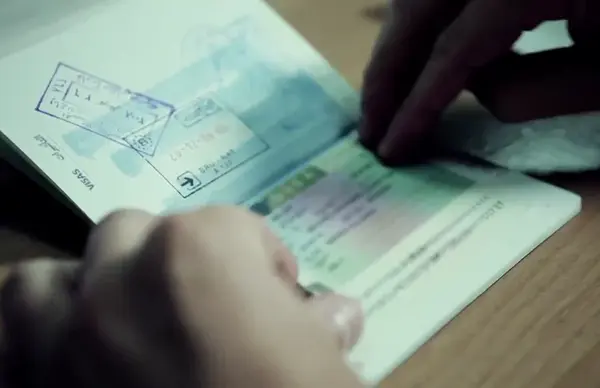
7. Collect your Italian study visa (Type D)
If approved, the Embassy will provide you with:
- your passport with the Type D visa affixed
- any instructions for entering Italy
The visa states:
- reason: study
- number of entries
- duration of validity
- permitted period of stay
What to do once you arrive in Italy
Many students believe that once they have obtained a visa, everything is complete.
In reality, there is one crucial step missing: Applying for a Study Residence Permit within 8 days.
The Residence Permit is the official document that authorizes non-EU citizens to legally live in Italy for a period exceeding 90 days. While a the italin study visa only allows entry into the country, the Residence Permit allows the student to remain, study, work part-time, and access essential services during their stay. It is issued by the Questura (Police Station) and must be applied for within 8 days of arriving in Italy. For students, the correct type of Residence Permit is the Study Residence Permit, which is valid for one year, renewable for the duration of their university studies, and is the essential legal document for legally living in Italy.
Procedure:
- Collect the Yellow Kit at the Post Office
- Fill out the form and attach the documents
- Pay the bills
- Receive the appointment date at the Police Headquarters
- Go to the Police Headquarters for photo and fingerprinting
Official information: https://www.poliziadistato.it/articolo/1694
Most common mistakes that lead to a student visa being denied for Italy
To avoid problems, consider that visas are denied especially when:
-
- financial resources are insufficient
- documents are incomplete or not translated
- accommodation is not properly documented
- the admission letter is unclear
- the academic profile is not consistent with the chosen program
- the student cannot explain their motivations
The fundamental rule is: complete accuracy in the documentation.
Obtaining a student visa for Italy is a technical process, but it is completely manageable if done in an orderly and timely manner.
By following the procedure step-by-step, preparing each required document, and presenting yourself at the Embassy with clarity and professionalism, you maximize your chances of obtaining a visa.
Studying in Italy is a strategic choice: high-quality universities, affordable costs, and a unique cultural environment. A student visa for Italy is your first step toward this new experience.