


Istituto Europeo di Design (IED): A Global Benchmark in Design Education
Campuses, English-taught courses and admission facts for anyone considering the Istituto Europeo di Design in Italy, Spain or Brazil
The Istituto Europeo di Design, explained simply
Thinking about where to study design in Milan, Madrid, Barcelona or São Paulo? The
Istituto Europeo di Design is one of the world's most established creative schools —
60 years, 10,000 students a year, 100+ nationalities.
Here's everything you need on IED admission requirements, campuses, and
English-taught design courses in Italy and Spain.
The Istituto Europeo di Design (IED) stands as a preeminent global authority on the "culture of the project," a pedagogical philosophy that prioritizes the synthesis of creative vision and industrial feasibility.
Institutional Identity and the Strategic Role of Design
By recently formalising its status as a Società Benefit (Benefit Company), IED has strategically pivoted toward a model of "Purpose-Driven Education." This transition reflects a sophisticated alignment with contemporary ESG (Environmental, Social, and Governance) standards, positioning design not merely as an aesthetic pursuit but as a critical tool for societal and environmental remediation. IED champions design as an equilibrium between functional pragmatism and emerging paradigms like sustainable and inclusive design, ensuring that creative output remains ecologically respectful and universally accessible.
The institution's scale confirms its dominance within the global academic landscape:
- 60-Year Legacy Six decades of specialised expertise in the creative industries.
- Global Academic Footprint An annual intake of 10,000 students representing over 100 nationalities — one of the most international design schools in Europe.
- Alumni Network A professional community exceeding 200,000 alumni driving innovation worldwide.
- Instructional Depth A faculty of 3,000+ educators overseeing 100+ undergraduate and 300+ postgraduate programmes.
IED's core mission involves codifying the skills necessary for professionals to navigate the complexities of the creative economy. Through a rigorous focus on critical thinking and experimentation, the school serves as a strategic bridge between theoretical research and the high-velocity demands of the professional world.
Historical Evolution: From the Morelli Vision to the Global Network
To analyse IED's current stature, one must evaluate its trajectory as a mirror of European design's professionalisation. Since its inception, the institution has consistently anticipated shifts in how design integrates into the global socio-economic fabric.
The 1960s & 70s: The Founding Vision and Research Codification
In 1966, Francesco Morelli established IED in Milan, envisioning a laboratory for design, fashion, visual arts, and communication. The 1970s saw the network expand to Rome (1973) and witnessed the 1976 founding of the Centro Ricerche Strutture Naturali, later renamed CRIED (Centro Ricerche Istituto Europeo di Design). This milestone effectively codified IED's commitment to structured, industry-facing research.
The 1980s & 90s: Domestic Consolidation and International Legitimacy
During the 1980s, IED leveraged the growing "Made in Italy" brand to expand into Cagliari (1984) and Turin (1989). In 1990, the institution further legitimised its academic standing as a founding member of CUMULUS (International Association of Universities and Colleges of Arts, Design and Media). The 1990s marked a strategic entry into Spain, catalysed by the "Proyecto-Diseño per Castilla-La Mancha" (1991) and the opening of the Madrid campus in 1994.
The 2000s to 2017: Intercontinental Expansion and State Recognition
The new millennium saw IED pivot toward a truly global presence, inaugurating campuses in Barcelona (2002), São Paulo (2005), Venice (2007), and Florence (2009). The 2009 acquisition of the Accademia di Belle Arti Aldo Galli in Como further diversified the portfolio. Critical academic legitimacy followed — an important point for anyone researching IED admission requirements and accreditation:
- Italy Recognition from MIUR (Ministry of Education, University and Research) began in 2010.
- Brazil Recognition from the Ministério da Educação (MEC) in 2009.
- Spain Accreditation from the Departament d'Ensenyament (2011) and the Ministry of Education (2012).
2017 to Present: Foundation Governance and Benefit Status
Following Morelli's passing in 2017, ownership transitioned to the Fondazione Francesco Morelli, ensuring a governance model dedicated to the public good. In 2020, IED integrated the Kunsthal centre in Bilbao, and in 2022, it finalised its transition to a Società Benefit, embedding positive social impact into its corporate bylaws.
The IED Educational Ecosystem: Training Programmes and Research
IED utilises a tiered educational framework designed to maintain a competitive advantage by addressing the entire lifecycle of professional development. This ecosystem ensures localised academic precision while maintaining global standards.
The training typologies are defined as follows:
- Undergraduate Foundational training includes Trienni (Three-year diplomas in Italy) and localised Spanish qualifications such as the Título de Grado en Enseñanzas Artísticas Superiores de Diseño, Bachelor of Arts (Honours), and the Ciclo Formativo de Grado Superior, alongside Foundation and Semester programmes.
- Postgraduate Advanced specialisation via Bienni (Two-year diplomas), Master Oficial, and professionalising Master's programmes — a key entry point for those researching fashion marketing courses in Barcelona or interior design master's degrees.
- Lifelong Learning Continuous development through Continuing Education, Bootcamp, and Summer/Winter/Junior modules.
- Research High-level academic inquiry focused on Design, Arts, and Transdisciplinarity through Dottorato (PhD) programmes.
This tiered architecture allows IED to serve a diverse student body of over 100 nationalities, ensuring the curriculum is sensitive to regional accreditation requirements while fostering global mobility.
Academic Prestige: Rankings, Awards, and Accreditations
Institutional quality is validated by third-party metrics and prestigious industry honours, confirming IED's role as a leader in design pedagogy — relevant context for anyone comparing the best design schools in Europe in 2026.
- Global Rankings IED is prominently featured in the TOP 100 QS World University Rankings® by Subject 2026 for Art & Design. It also holds the 18th position in the CEOWORLD "Best Fashion Schools in the World" 2026 ranking.
- Major Awards Coinciding with its 60th anniversary, the institution was honoured with the Compasso d'Oro 2026, the highest distinction in the design sector.
- Official Accreditations Programmes are fully accredited by the MIUR in Italy, the Departament d'Ensenyament and Ministry of Education in Spain, and the MEC in Brazil.
These credentials underpin more than 170 academic partnerships, facilitating robust international dialogue and collaborative research.
Global Campus Directory
The IED network is strategically positioned in key creative hubs across Italy, Spain, Brazil, and the USA, providing students with localised industry immersion. Filter by country below to find contact details for each campus.
Select a country to view IED campus contact details
The New York Hub serves as a strategic "cultural connector," facilitating global visibility and high-level industrial partnerships for the entire network.
Curricula and Course Offerings
To meet the demands of a fragmented creative market, IED has expanded its curriculum beyond traditional silos. The institution now operates across nine modern thematic areas:
- Arte e Curatela (Art & Curatorial Studies)
- Cinema, Video e Sound Design (Cinema, Video & Sound Design)
- Design Futures
- Fashion, Accessories e Jewelry Design
- Fotografia e Narrazioni Visive (Photography & Visual Narratives)
- Illustrazione, Animazione e Game Design (Illustration, Animation & Game Design)
- Interior, Product e Mobility Design
- Strategia, Marketing e Comunicazione (Strategy, Marketing & Communication)
- Visual Communication, Graphic e Interactive Media
In the context of the 60th-anniversary "Plural Intelligences" theme, these curricula are taught through the lens of "design as a relationship." This approach emphasises five key dimensions to prepare students for a collaborative, transdisciplinary future:
- Relationships
- Memory
- Materials
- Learning processes
- Shared intelligence
IED Course Catalog
Browse the current catalogue of English-taught design courses in Italy and Spain as well as programmes in Italian, Spanish and Portuguese — use the filter below to narrow results by campus location, then load more to see the full list.
Conclusion: The Future of Plural Intelligences
As IED commemorates its 60th anniversary, it has launched the "Plural Intelligences" manifesto — a scholarly and practical investigation into design as a catalyst for interaction between diverse forms of thought. Through its international Public Programme and the Notes on Plural Intelligences journal, IED is redefining design not as a solo act of production, but as a relational practice that integrates heterogeneous voices and shared knowledge.
Frequently Asked Questions
You migth be also interested in:

What Is a Bachelor of Sciences (BSc) and What Is Its Italian Equivalent?
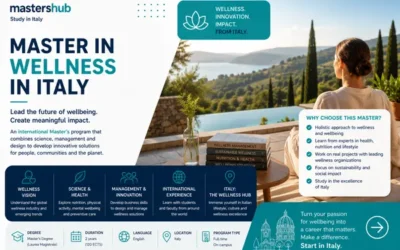
Master in Wellness Programs for Career Growth in Italy
MASTERSHUB — LAYOUT MASTERS v2 Divi Code Module · max-width 1400px · mobile-ready · SEO...

Master in Consulting in Rome
MASTERSHUB — LAYOUT MASTERS v2 Divi Code Module · max-width 1400px · mobile-ready · SEO...
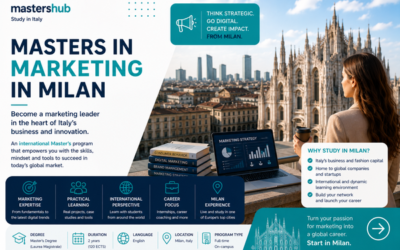
Masters in Marketing in Milan: Strategic Excellence for Global Success
MASTERSHUB — LAYOUT MASTERS v2 Divi Code Module · max-width 1400px · mobile-ready · SEO...