


Requirements to Study in Italy for Non-EU Students
Universities and Postgraduate Programs
Find out everything you need to successfully access Italian universities as a non-EU student — from essential documents to language criteria, visa procedures, and recognition of previous qualifications.

To access academic pathways in Italy, it is essential to clearly understand the requirements for studying in Italy and to obtain all necessary documents, language certifications, and entry authorizations required by current regulations.
Understanding in advance the requirements highlighted below is crucial to avoid mistakes, delays, or refusals during the admission process.
1. Required Academic Qualifications for Admission
One of the main requirements to study in Italy is holding a valid and recognized academic qualification. Italian universities always verify the compatibility between the foreign qualification and the academic level required.
Access to the Bachelor’s Degree (Laurea Triennale)
-
Valid upper-secondary school diploma in the country of origin
-
At least 12 years of schooling
These conditions are among the most important requirements for non-EU students in Italy.
Access to the Master’s Degree (Laurea Magistrale)
-
Bachelor’s degree or equivalent qualification
-
Consistency between the previous academic background and the chosen discipline in Italy
Access to University Master Programs, Postgraduate Courses, and Advanced Training
-
Adequate university qualification (Bachelor’s or Master’s degree)
-
Possible additional requirements: CV, portfolio, motivation letter
Access to PhD Programs (Dottorato di Ricerca)
-
Master’s degree or equivalent
-
Selection based on a public call (CV, research project, exams)
Credential evaluation is always a crucial step among the requirements for non-EU students wishing to study in Italy.
2. Required Documents for Italian Universities
To enroll in academic programs, students must provide a set of essential documents, often referred to as the documents needed to study in Italy.
These include:
-
Valid passport
-
Academic qualification and official transcripts
-
Certified translations of documents
-
Dichiarazione di Valore or CIMEA certification
-
Updated CV (for postgraduate programs)
-
Portfolio or letters of recommendation, if required
Submitting complete documentation is crucial to meet the requirements to study in Italy and obtain admission.
3. Language Requirements: Italian or English
Language proficiency is one of the most important requirements.
Courses Taught in Italian
-
Generally required level: B2
-
Accepted certifications:
-
CILS
-
CELI
-
PLIDA
-
University entrance language tests
-
Courses Taught in English
-
Required level: B2 or C1
-
Common certifications:
-
IELTS
-
TOEFL
-
Cambridge English
-
Language proficiency is one of the most frequently verified requirements for non-EU students in Italy.
4. Mandatory Pre-Enrollment on Universitaly (for all non-EU students)
Among the essential institutional requirements is the mandatory pre-enrollment through Universitaly, required for all non-EU students residing abroad.
It is used to:
-
Communicate the intention to enroll — link to the Universitaly portal: https://www.universitaly.it/
-
Upload the required documents
-
Allow the consulate to evaluate the visa application
This step is always mandatory, even for those choosing a private university.
5. Requirements for the Study Visa (Type D)
The study visa is one of the most important elements among the requirements to study in Italy for non-EU students.
Required documents:
-
Admission letter from the university
-
Proof of financial means
-
Accommodation in Italy
-
Health insurance
-
Personal and financial documents
Without the study visa, it is not possible to enter Italy for study purposes.
6. Residence Permit for Study Purposes
After arrival, the student must apply for the residence permit within 8 days.
Required documents:
-
Passport
-
Copy of the study visa
-
University enrollment confirmation
-
Health insurance
-
Proof of financial means
-
Receipts of the required fees
The residence permit is an essential requirement to remain in Italy throughout the academic program.
7. Financial Requirements
The financial requirements to study in Italy concern the demonstration of sufficient resources to support oneself during the stay.
They include:
-
Minimum funds required by the Ministry
-
Personal bank account or financial guarantor
-
Coverage of living and housing expenses
-
Payment of university tuition fees
Many universities offer:
-
Regional scholarships
-
Partial exemptions / fee reductions
-
Financial aid based on income or merit
8. Specific Requirements for Master’s Programs, Postgraduate Studies, and PhDs
Advanced programs often include additional conditions:
-
Professional experience
-
Portfolio
-
Motivation letters
-
Selection interviews or tests
-
Research projects (for PhD programs)
9. Recognition of Foreign Academic Qualifications
To fully meet the requirements to study in Italy, the foreign qualification must be officially recognized.
Tools and procedures used:
-
Dichiarazione di Valore (DV)
-
CIMEA certifications
-
University evaluations
-
Bologna Process standards
This step ensures that the qualification is authentic and compatible with the required academic level.
The requirements for non-EU students to study in Italy include appropriate academic qualifications, valid documents, language proficiency, official pre-enrollment, a study visa, a residence permit, and sufficient financial resources.
Understanding all these requirements as a whole allows students to approach their academic journey with greater confidence and to begin their studies in Italy in a regular and legally compliant manner.
Potrebbero Interessarti Anche
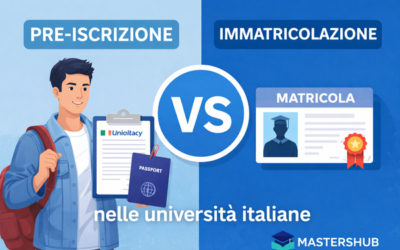
Pre-registration vs. enrollment
Pre-Enrollment vs Enrollment: Differences and Procedures in Italian...
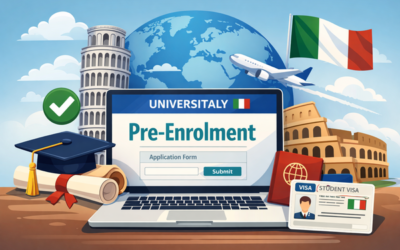
Pre-registration at Universitaly
Universitaly Pre-Registration A step-by-step guide to pre-registration on Universitaly for...

Procedure for studying in Italy
Procedure for studying in Italy: Guide 2026 for International StudentsStudying in Italy...

Italian Study visa
Italian Study Visa How to Obtain a Long-Stay Visa (Type D)Applying for an Italian study...